Virtual Open House
Welcome to the 290 Extension Project Community Open House.
This self-guided Virtual Open House gives you an opportunity to review the initial design for the 290 Extension Project and provide feedback on the initial design. The Virtual Open House includes the same content presented at the in-person meetings, formatted for online viewing. Use the navigation menu to review the materials at your own pace and use the comment form to share your input.
Official comments for this open house are being collected from September 29, 2026, through October 30, 2026.
How to Participate
- Watch the pre-recorded presentation below for an overview of the project.
- Review the content under each section for an in-depth look. These sections provide additional background, describe the proposed improvements, and present the initial design materials.
- View the proposed project design. Visit the “Proposed Design” section to review the design in more detail.
- Submit an official comment through the comment form or one of the other official submission options.

Look for this emblem across this Virtual Open House. It indicates where community feedback influenced the project design.
All feedback is welcomed. While you review the Virtual Open House, here are some tips to help you most effectively influence the project design as it is further developed:
- Share your perspective: Imagine yourself navigating the proposed design. How does it look to you from your perspective as a roadway user?
- Tell us the “why” behind your reaction: Does the proposed change make your trip safer, easier, or more difficult? Be specific about trade-offs.
- Find a specific feature or change you want to comment on: Focus on a proposed design element (e.g. longer turn lanes) and note where on the corridor the design element you are referring to is located.
Project Overview
Watch the pre-recorded presentation below for an overview of the project. The video presents the same information you will see on the exhibit boards.

GOAL
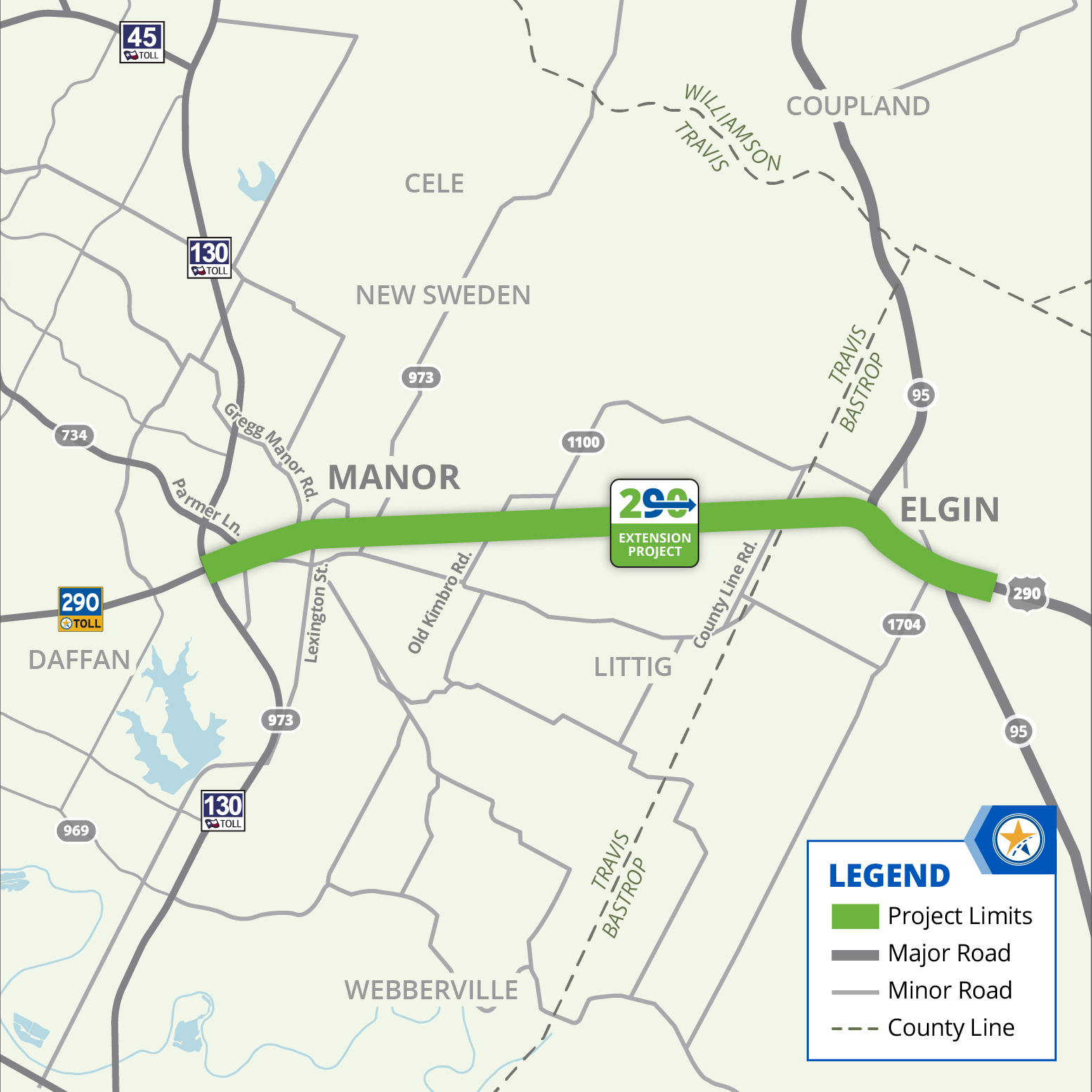
To improve mobility and safety along US 290

STAGE
Environmental Study and Schematic Design

LIMITS
SH 130 in Travis County to east of SH 95 South in Bastrop County

LENGTH
Approximately 15 miles
Project Development Timeline
Click on the blinking hotspots to view more details on each step.
Tolls are not a tax: The Mobility Authority is not a taxing authority and therefore cannot build roads without toll financing. Tolls are not a tax as only people who use the facilities pay them. They enable more expedient financing of construction costs, allowing for much faster construction and road opening than under the traditional, taxpayer-funded pay-as-you-go model.
Existing non-tolled lanes would not be reduced: While many toll projects are constructed in existing highway corridors, the amount of existing non-tolled lanes are preserved and are often enhanced. The number of existing non-tolled lanes on US 290 would not be reduced if the 290 Toll is extended east through Manor and Elgin.
Project Schedule
-
APRIL 2025
Project Kickoff
-
SEPTEMBER 2025
Community Listening Sessions
-
EARLY 2026
Project Design Began
-
SEPTEMBER AND OCTOBER 2026
Preliminary Schematic LayoutsOpen House
-
MID 2027
Draft Environmental Document
-
MID/LATE 2027
Public Hearing
-
EARLY 2028
Final Schematic and Environmental Decision
Environmental Process
Click the blinking hotspot markers for more details about each step in the National Environmental Policy Act (NEPA) process.
What We Did
Three Community Listening Sessions
- Virtual
Online from Sept. 9 through Oct. 10, 2025 - Manor
In-Person on Sept. 23, 2025 - Elgin
In-Person on Sept. 25, 2025
1,219 Individual Comments
Community comments were carefully reviewed and helped inform the proposed design.
5 Feedback Collection Methods:
- 64 Vision Board Comments
- 559 Online Survey Comments Submitted
- 32 Public Inquiries
(email, hotline, online form) - 530 Map Comments
(online pins, roll plots) - 34 Written Comments
In the Community
We participated in 19 community events and meetings with elected and City/County officials, neighborhood associations business leaders, and emergency services to share project information throughout 2025.
-
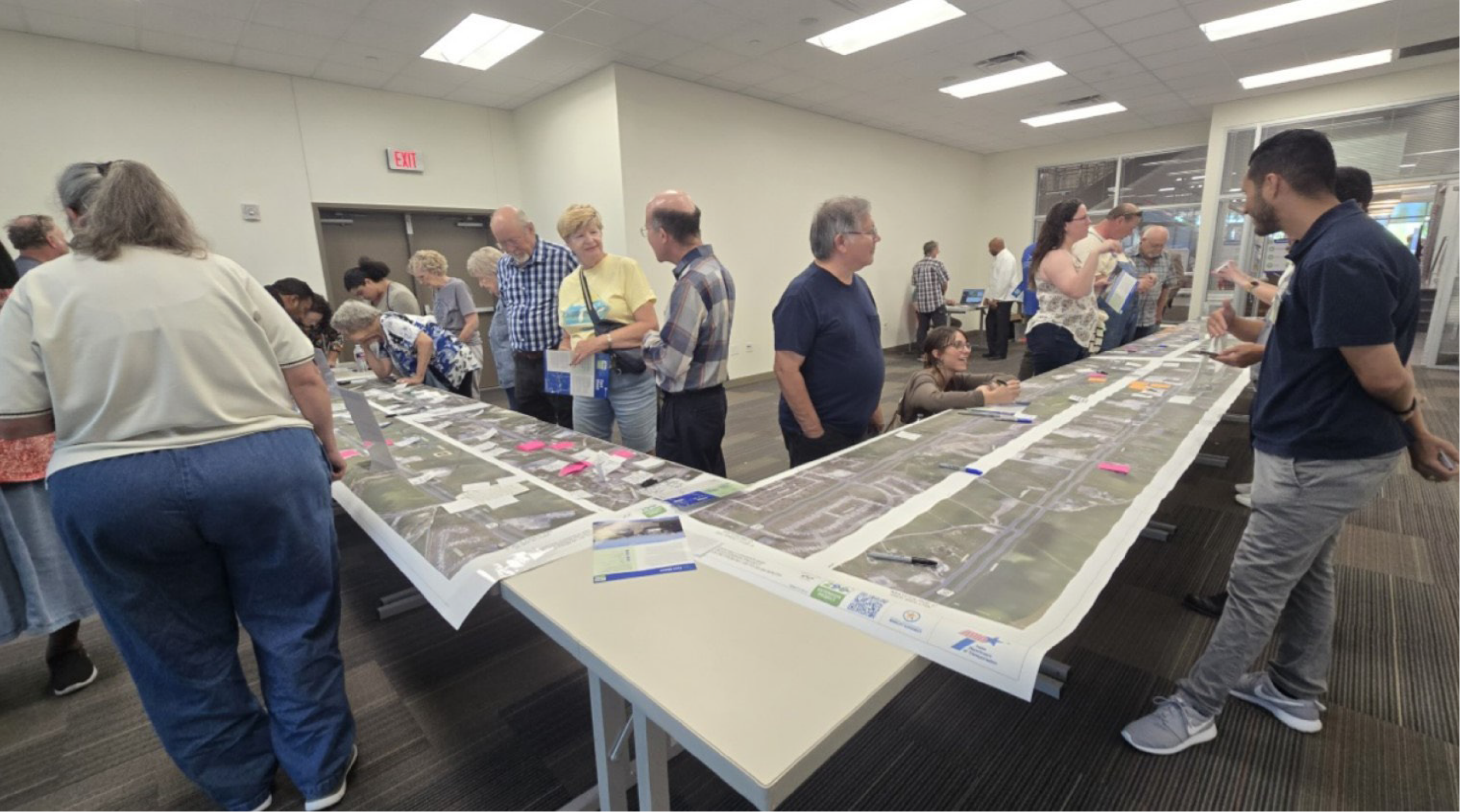
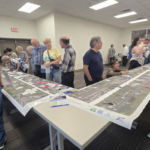
The Community Listening Session in Elgin -
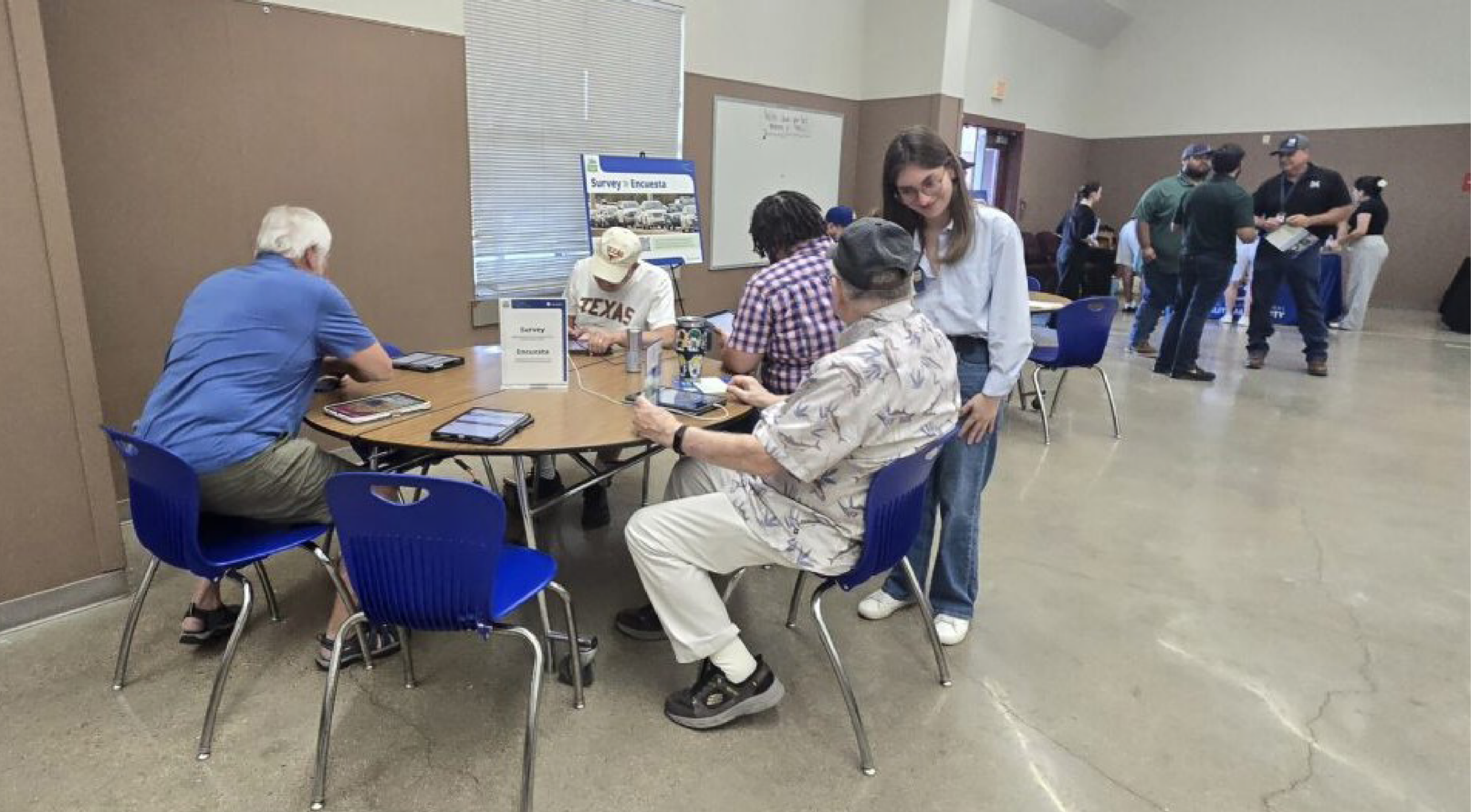
The Community Listening Session in Manor. -
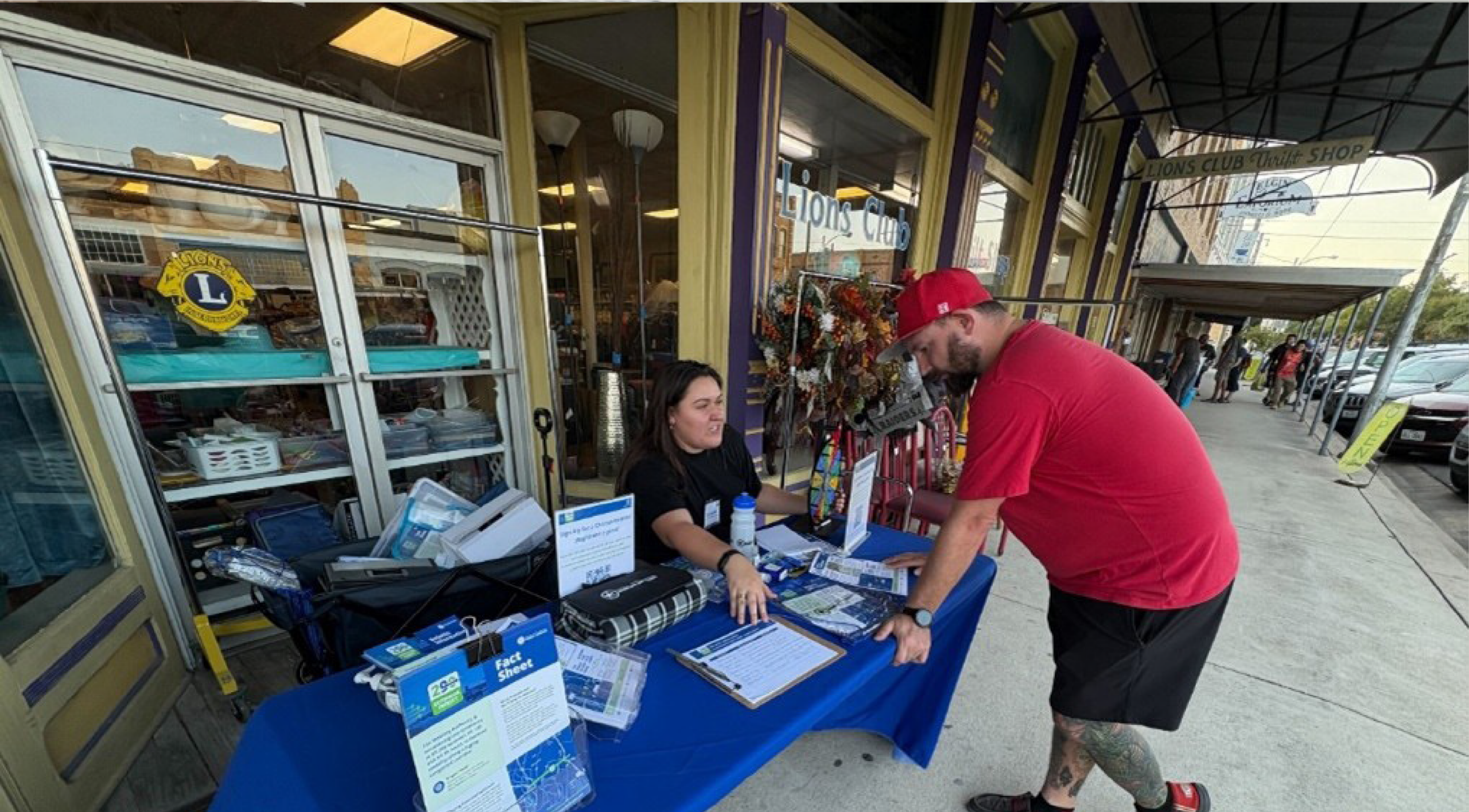
The project team and community members at the Elgin Sip Shop & Stroll on Sept. 11, 2025. -
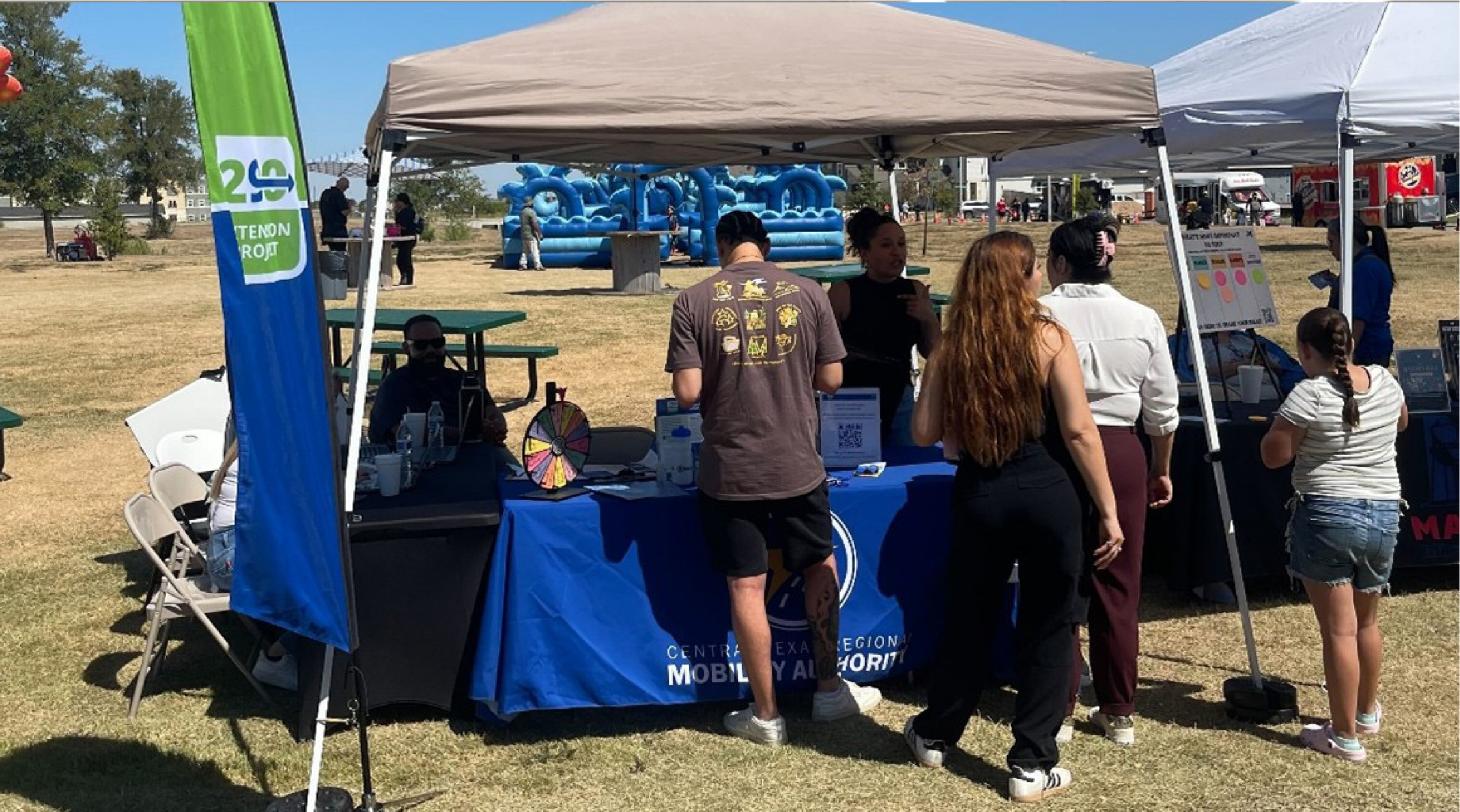
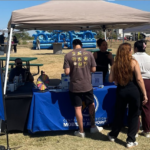
The project team and community members at the Hispanic Heritage Festival in Manor on Oct. 4, 2025.


What We Heard
The extensive community input received, as well as limitations based on the constrained nature of this corridor, influenced the proposed design.
- Congestion & Traffic Flow
- Property Access & Connectivity
Project Funding - Multimodal Transportation & Public Transit
- Safety & Emergency Access
- Environmental & Community Impact
Purpose & Need
The National Environmental Policy Act (NEPA) requires projects study their potential environmental impacts. Defining a Purpose and Need is a fundamental requirement of the study, which outlines what we are trying to accomplish and why.
Need
The US 290 corridor between SH 130 and SH 95 South currently does not have sufficient capacity to meet existing and future travel demands.
Increased population and commercial growth cause rising traffic volumes resulting in:
- Congestion
- Limited Access and Connectivity
- Delays
- Reduced Travel Reliability
Purpose
The purpose of the 290 Extension Project is to improve mobility and connectivity along US 290 between SH 130 and east of SH 95 South.
These improvements aim to provide a more dependable route for all users and mitigate impacts to the environment and surrounding communities by:
- Addressing Congestion
- Improving Intersection Operations
- Enhancing Access to Neighborhoods and Businesses
- Supporting Reliable Emergency Response
Corridor Crash Data
2020-2025:
- 19 Fatal Crashes
- 23 Crashes with Injuries Unknown
- 73 Suspected Major Injury Crashes
- 299 Possible Injury Crashes
- 315 Suspected Serious Injury Crashes
- 1,971 Crashes with No Injuries
The crash heat map below shows areas along the corridor with higher concentrations of crashes resulting in fatalities or serious injury. Most crashes of this type are concentrated near key intersections.
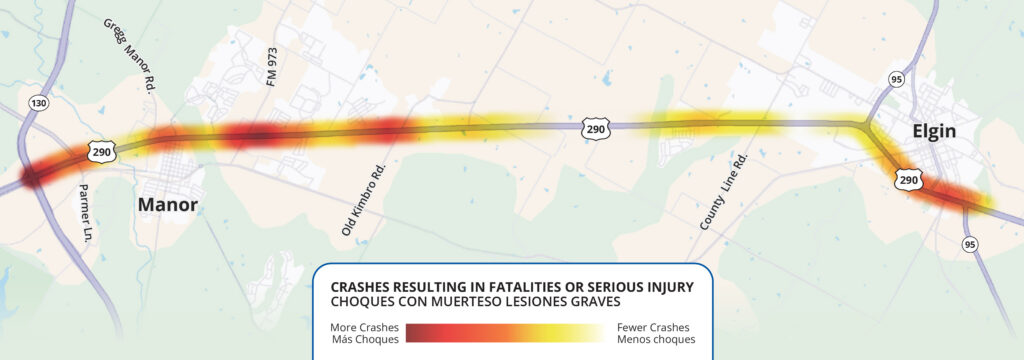
Source: Texas Department of Transportation’s CRIS Crash Report Portal.
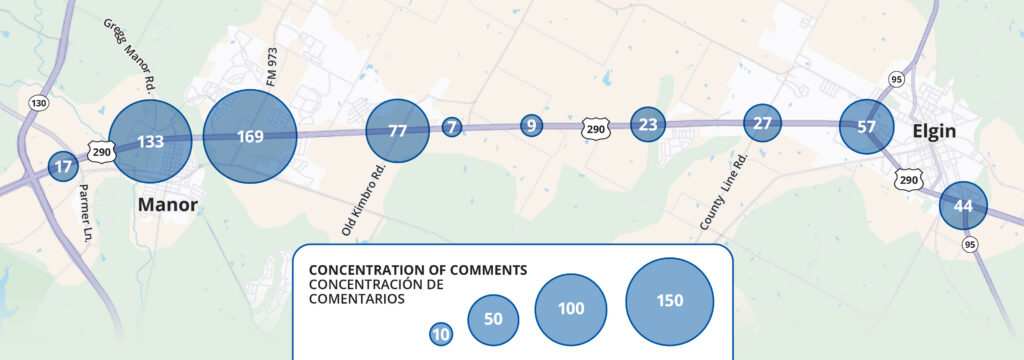
Source: Community Listening Session Interactive Comment Map
Growth Along the Corridor
Growth Statistics from 2000 to 2024:
- Travis County grew approximately 66%.
- Bastrop County grew approximately 97%.
- City of Manor grew approximately 1,686%. It is projected to grow another 63% between 2024 and 2050.
- City of Elgin grew approximately 118%. It is projected to grow another 205% between 2024 and 2050.
Sources: US Census Bureau, Texas Water Development Board
Annual Average Daily Traffic and Forecasted No-Build Travel Times
Click on the circle icons on the map below to learn about how the vehicle volume is projected to increase in the coming decades. Click on the arrow icons to learn how travel times are projected to increase if no improvements are made.*
*Future travel time forecasts assume traffic volumes grow at TxDOT-approved rates of 2.0% to 4.0% annually. Actual traffic growth and travel times may differ due to changes in population, employment, land use, and other factors affecting travel demand.
Proposed Design
Corridor Improvements
Click on the blinking hotspot markers to see what we’re proposing to improve US 290.
Project Configuration
Click on image to view a larger version. A detailed text description of the configuration map is available here for screen reader users and others who prefer a text-based format.
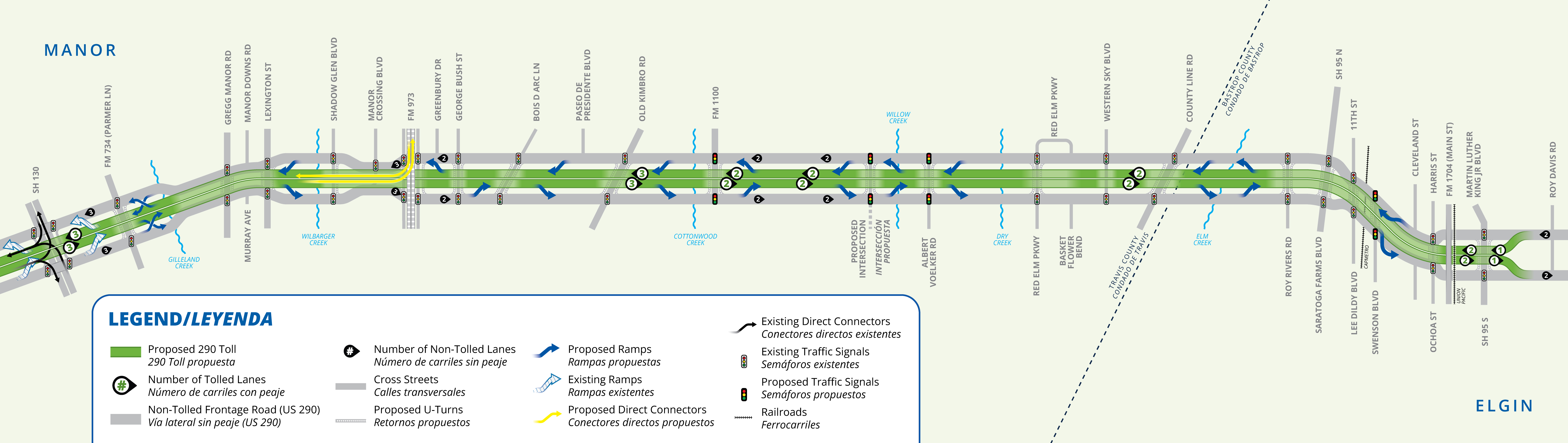
View the detailed 60% design schematics here (45MB).
Key Intersections
Click or tap on the icons in the map below to see additional information on proposed improvements in that area, including:
- A diagram of the proposed improvements
- The top concerns form the Community Listening Sessions at each intersection
- A sample comment from the interactive map exercise
- Solutions and concerns addressed by the proposed design
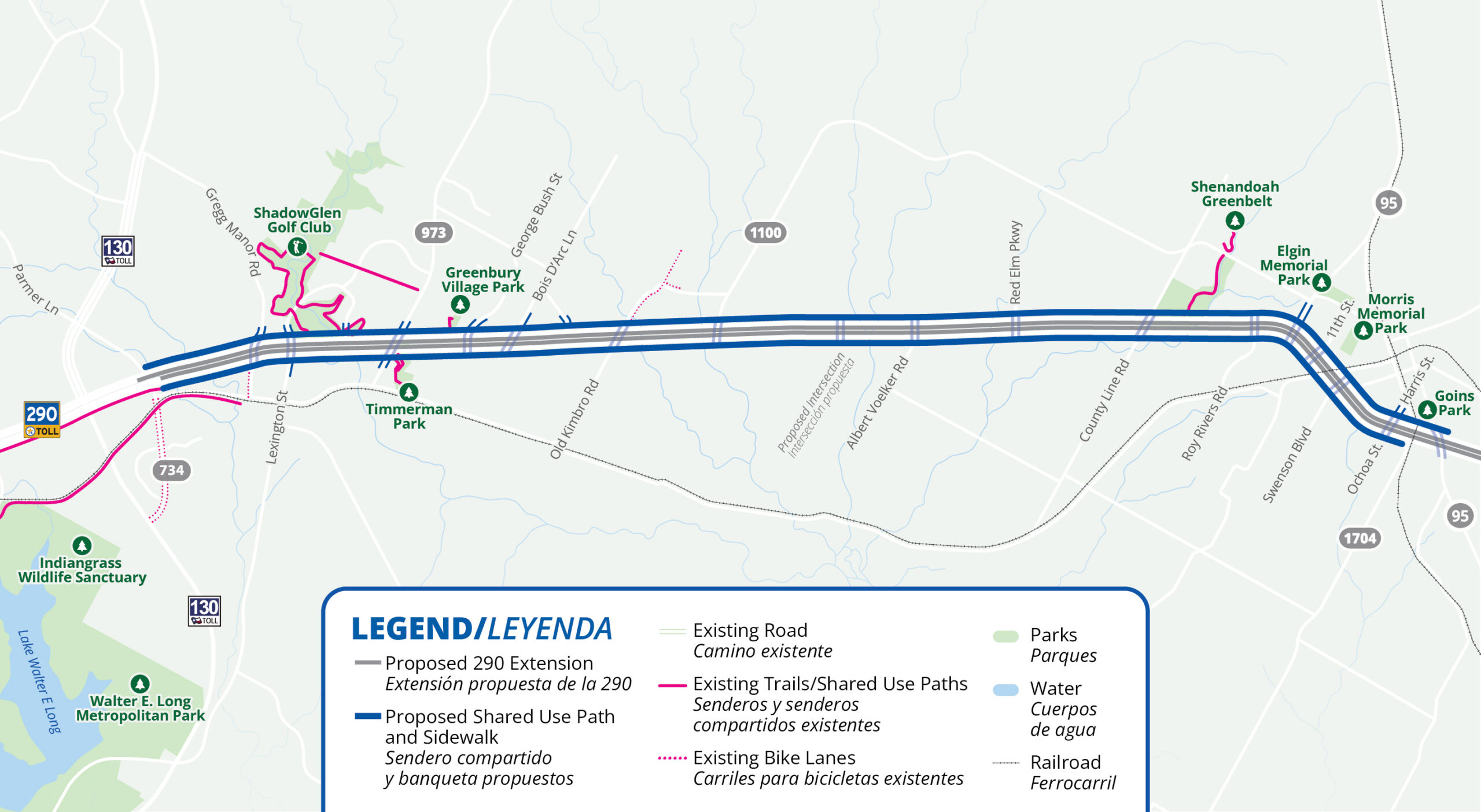
Bicycle and Pedestrian Facilities
Click on image to view a larger map.
Project Constraints
Navigate the interactive map below to explore the various environmental constraints and considerations related to a specific location along the project corridor
Traffic Noise Evaluation
Impact & Abatement Criteria
The Federal Highway Administration and Texas Department of Transportation have established policies that determine noise impact thresholds and whether noise barriers must be evaluated.
The Process
1. Identify receivers. Receivers are those impacted by traffic noise — residences, schools, hospitals, recreational areas, places of worship, offices, hotels, restaurants, etc.
2. Calculate noise levels.
3. Evaluate to determine noise abatement. Noise reduction barriers must be both …
- Reasonable – Is it cost effective? Will it result in a notable noise reduction?
- Feasible – How realistic is its acoustic potential? Is its construction feasible?
4. If Abatement is NOT required, process ends.
5. If Abatement is required and if the project receives environmental clearance, owners and residents are given a vote in determining whether a noise barrier is built.
For more details, take a look at our infographic about the noise barrier process or watch a video about TxDOT’s noise barrier process.
Provide Your Comment
As a reminder, here are some things to keep in mind as you consider your feedback:
- Share your perspective: Imagine yourself navigating this new design. How does it look to you from your perspective as a roadway user?
- Tell us the “why” behind your reaction: Does the proposed change make your trip safer, easier, or more difficult? Be specific about trade-offs.
- Find a specific feature or change you want to comment on: Focus on a proposed design element (e.g. longer turn lanes) and note where on the corridor the design element you are referring to is located.
Additional ways to provide your comment:
Email:
290extensionproject@ctrma.org
Mail-In:
Central Texas Regional Mobility Authority
ATTN: 290 Extension Project
3300 N. IH-35, Suite 300
Austin, TX 78705
By Phone:
Leave us a voicemail at (512) 265-6921